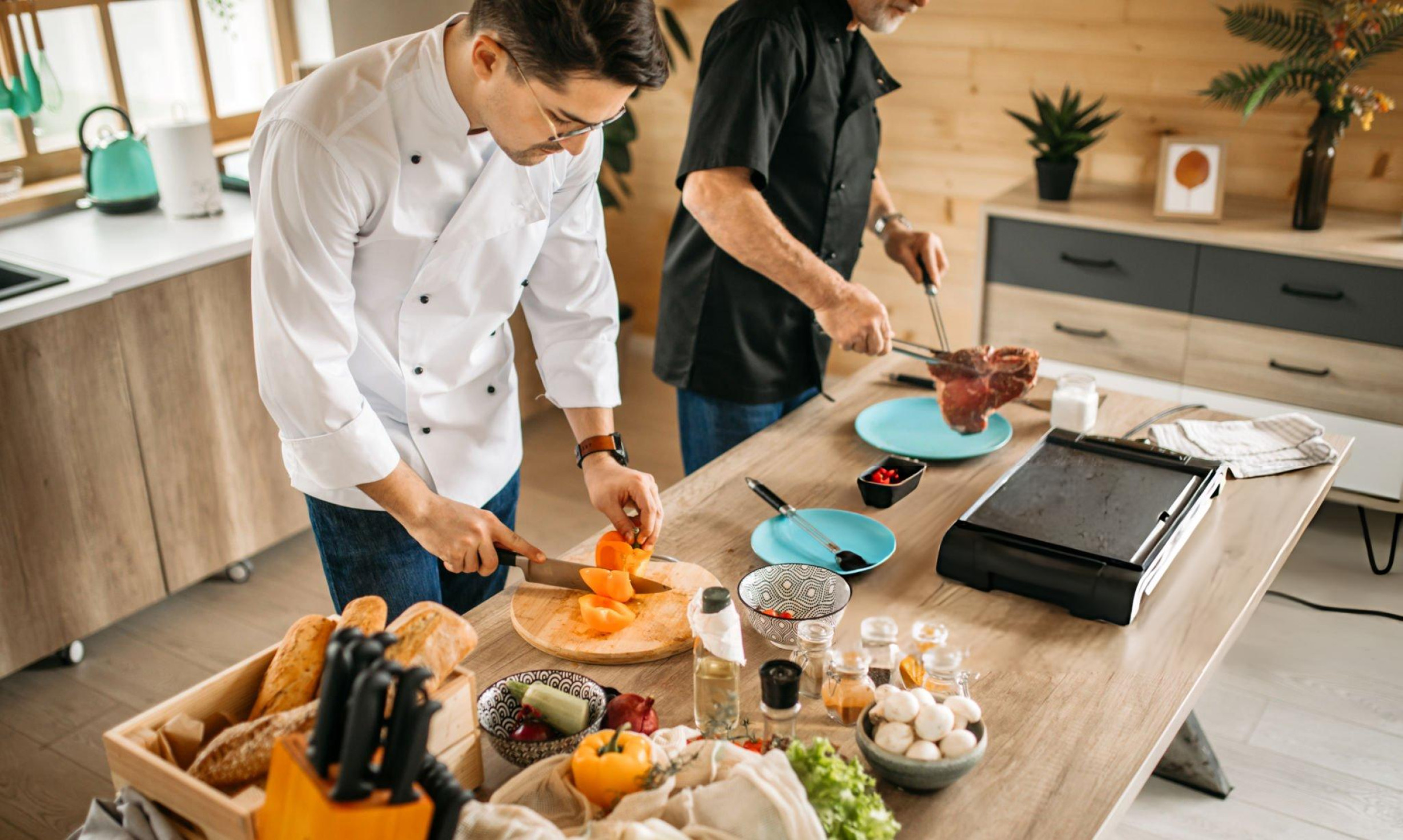
The Core Blades: Four Knives That Do 90% of the Work
The 8-Inch or 10-Inch Chef’s Knife (or Gyuto)
The 3.5-Inch to 4-Inch Paring Knife
The Serrated Bread and Pastry Knife
The 6-Inch Flexible or Semi-Stiff Boning Knife
Edge Maintenance: Keeping Blades Razor-Sharp Mid-Shift
-
Honing Steel or Ceramic Rod: Contrary to popular belief, a honing rod does not actually sharpen a dull knife by grinding away metal; it realigns the microscopic teeth along the blade’s edge that bend out of shape against hard polyethylene cutting boards. A 12-inch fine ceramic honing rod is ideal because it works safely on both softer European stainless steel and harder Japanese steel without chipping the edge.
-
Combination Whetstone (1000/4000 or 1000/6000 Grit): While you will not pull out a whetstone in the middle of Saturday dinner service, keeping a medium-fine splash-and-go stone in your locker or bag lets you restore a true razor edge on a quiet Tuesday morning in ten minutes.
-
Blade Guards (Sayas): Never slide an uncovered knife directly into a canvas pocket. Friction against nylon webbing dulls edges immediately and slices right through the bag over time—creating a serious hazard when you reach inside. Always fit every blade with a snug plastic edge guard or wooden saya.
The Unsung Prep Heroes: Small Tools You Reach for Every Hour
-
Y-Peeler: Straight swivel peelers have their loyalists, but a sharp carbon-steel Y-peeler peels carrots, celery root, asparagus spears, and winter squash at lightning speed with less wrist strain. Pack two; peelers vanish faster than Sharpies in commercial kitchens.
-
Microplane Zester: Essential for grating fresh nutmeg, Parmesan, ginger, garlic, whole tonka beans, and citrus zest without catching the bitter white pith.
-
Offset Spatula (Small and Medium): Far beyond pastry work, an angled offset spatula is indispensable on the savory line for flipping delicate fish fillets, lifting seared scallops, spreading purees cleanly across plates, and scraping sheet pans.
-
Heavy-Duty Kitchen Shears: Look for shears with blades that separate completely at the pivot so you can sanitize them thoroughly after spatchcocking chickens, snipping herb bundles, or cutting parchment rounds.
-
Plating Tweezers (Straight and Offset): Whether you are placing micro-herbs, turning hot proteins on a grill, or fishing a stray thyme stem out of a pan sauce, 8-inch stainless steel precision tweezers act as heatproof extensions of your fingers.
Precision Measurement and Line Survival Gear
-
Digital Instant-Read Thermometer: Guessing protein temperatures by touch alone risks sending out overcooked duck breast or undercooked poultry—and fails health department inspections immediately. Carry a waterproof, fast-reading digital thermometer (one that registers within two to three seconds) calibrated regularly in ice water.
-
Tasting Spoons and Basting Spoon: Every good cook tastes constantly. Keep a dedicated bundle of deep-bowled tasting spoons—often vintage silver-plated soup spoons picked up from thrift stores for their comfortable weight and narrow bowls—specifically for basting butter over steaks and tasting reductions.
-
Fish Bone Tweezers: Even “pin-bone out” fillets from reputable seafood purveyors occasionally harbor missed bones. Angled, wide-tip fish tweezers pull pin bones cleanly without tearing the flesh.
-
Permanent Markers, Pens, and Pocket Notebook: Labeling deli containers with the item name, date, and your initials is mandatory in every professional kitchen. Keep two fine-tip permanent markers, a reliable ballpoint pen, and a grease-resistant pocket notebook for recording prep lists, recipe adjustments, and plating diagrams.
-
Cake Tester: A thin metal cake tester is not just for bakers; savory line cooks slide it into the center of thick fish fillets, roasted root vegetables, and braised meats to feel internal tenderness and check core temperature against their bottom lip.