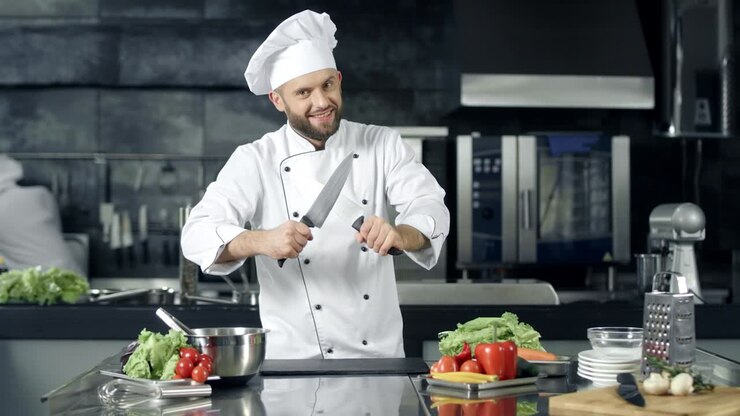
Stepping into a professional kitchen reveals that the true heartbeat of culinary mastery is not found in complex cooking techniques or expensive gadgets. Instead, it lives in the simple, rhythmic motion of a chef working a blade across a cutting board. Mastering knife skills is the single most transformative investment you can make in your home cooking journey. Beyond saving valuable time during meal preparation, proper cutting techniques ensure that your ingredients cook evenly, release their flavors optimally, and look visually stunning on the plate. Many home cooks struggle in the kitchen simply because they lack confidence with a knife, treating it as a dangerous tool to be feared rather than an extension of their hand. By learning professional grip mechanics, proper posture, and fundamental cuts, you will elevate your cooking from an exhausting chore into an enjoyable craft.
The Foundation of Safety and Control
Before slicing a single tomato, you must master the physical connection between your body, your board, and your blade. Safety in professional kitchens begins with stance and stability. Stand facing your cutting board with your body slightly angled, allowing your dominant shoulder to drive the motion. Ensure your cutting board is completely stable by placing a damp paper towel underneath it to prevent slipping, which is the leading cause of accidental cuts.
Equally important is how you hold the knife. Many beginners wrap their entire hand around the handle like a tennis racket, sacrificing accuracy and leverage. Professional chefs use what is known as the pinch grip. To execute this, place your thumb and index finger flat against the sides of the blade right where it meets the handle, wrapping your remaining three fingers securely around the bottom of the handle. This grip provides total control over the blade and prevents it from wobbling during heavy tasks.
-
The Claw Hand: Protect your non-dominant hand by curling your fingertips inward like a cat claw. Rest the flat side of the knife blade gently against your middle knuckles to guide your cuts safely.
-
Let the Knife Do the Work: A sharp knife requires very little downward force. Pushing down hard on dull blades crushes food and increases the likelihood of the blade slipping.
-
Keep Your Eyes Forward: Avoid looking away while chopping. Focus your attention on the food and the rhythm of the blade rather than distractions around the kitchen.
Essential Knife Maintenance and Sharpening
A sharp knife is a safe knife, counterintuitive as that may sound to beginners. Dull blades slip off the slippery skins of vegetables like tomatoes and onions, forcing you to apply dangerous downward pressure. Professional chefs maintain their tools daily to ensure peak performance.
Understanding the difference between honing and sharpening is crucial for maintaining your investment. Honing with a steel rod does not actually remove metal; instead, it realigns the microscopic teeth of the blade that bend during regular use. You should hone your chef knife every few times you use it. Sharpening, on the other hand, grinds away old metal to create a brand new edge using a whetstone or professional sharpener, which is typically necessary only once or twice a year depending on usage.
-
Wash by Hand: Never put your kitchen knives in the dishwasher. The harsh detergent, extreme heat, and clattering against other utensils ruin the edge and degrade the handle material.
-
Proper Storage: Store your knives in a wooden block, on a magnetic strip, or inside protective edge guards. Tossing them loosely into a kitchen drawer damages the blade edge and creates a safety hazard.
-
Choose the Right Board: Always cut on wood or high-density plastic boards. Never cut directly on glass, granite, or ceramic countertops, as these hard surfaces will instantly dull and chip your blade.
Mastering Core Professional Cuts
Once you feel comfortable handling your knife, you can focus on uniformity. Uniform pieces cook at the same rate, preventing some ingredients from burning while others remain raw. Professional culinary academies teach several fundamental cuts that form the basis of almost every recipe worldwide.
The foundational cut is the slice, which serves as the stepping stone for dicing and mincing. When slicing round vegetables like carrots or cucumbers, always cut a thin slice off one side first to create a flat, stable base on your cutting board. This prevents the vegetable from rolling around while you work.
-
The Dice: To create a standard dice, first slice your vegetable lengthwise into planks, then cut those planks into matchsticks, and finally cross-cut the matchsticks into uniform cubes.
-
The Mince: Ideal for garlic, shallots, and herbs, mincing requires gathering your ingredients into a pile, anchoring the tip of the knife to the board, and rocking the heel of the blade up and down rapidly over the food.
-
The Julienne: This precision cut creates matchsticks measuring approximately one-eighth of an inch thick and two inches long, commonly used for salads and garnishes.
-
The Chiffonade: Perfect for leafy herbs and greens like basil or spinach, stack the leaves tightly, roll them up like a cigar, and slice crosswise into thin ribbons.
Frequently Asked Questions
What is the most important knife to buy as a beginner?
A standard eight-inch chef knife is the absolute workhorse of any kitchen. It handles ninety percent of everyday tasks, from chopping vegetables and slicing meat to mincing herbs.
How often should I have my kitchen knives professionally sharpened?
If you hone your knife regularly with a steel rod, a professional sharpening once or twice a year is usually sufficient for a home cook who cooks several times a week.
Why do professional chefs use large knives for small tasks?
A larger chef knife provides better leverage, a longer cutting edge for sweeping motions, and enough knuckle clearance above the cutting board to chop quickly and comfortably.
Can I use a ceramic knife instead of a traditional steel knife?
Ceramic knives hold their edge extremely well and never rust, but they are very brittle and prone to chipping if they drop on the floor or encounter hard bones.
What is the safest way to clean a sharp kitchen knife?
Wipe the blade carefully from the spine down toward the cutting edge using a soapy sponge, keeping the sharp edge pointed away from your fingers at all times, then rinse and dry immediately.
Why does cutting onions make people cry and how can knife technique help?
Cutting onions ruptures their cell walls, releasing a sulfur gas that irritates your eyes. Using a very sharp knife makes clean cuts rather than crushing the cells, significantly reducing the amount of gas released into the air.
How do I know if my cutting technique is efficient?
Efficient cutting relies on a smooth rocking motion where the tip of the knife never leaves the board. If you find yourself lifting the entire knife up high off the board for every single cut, your technique needs adjustment.