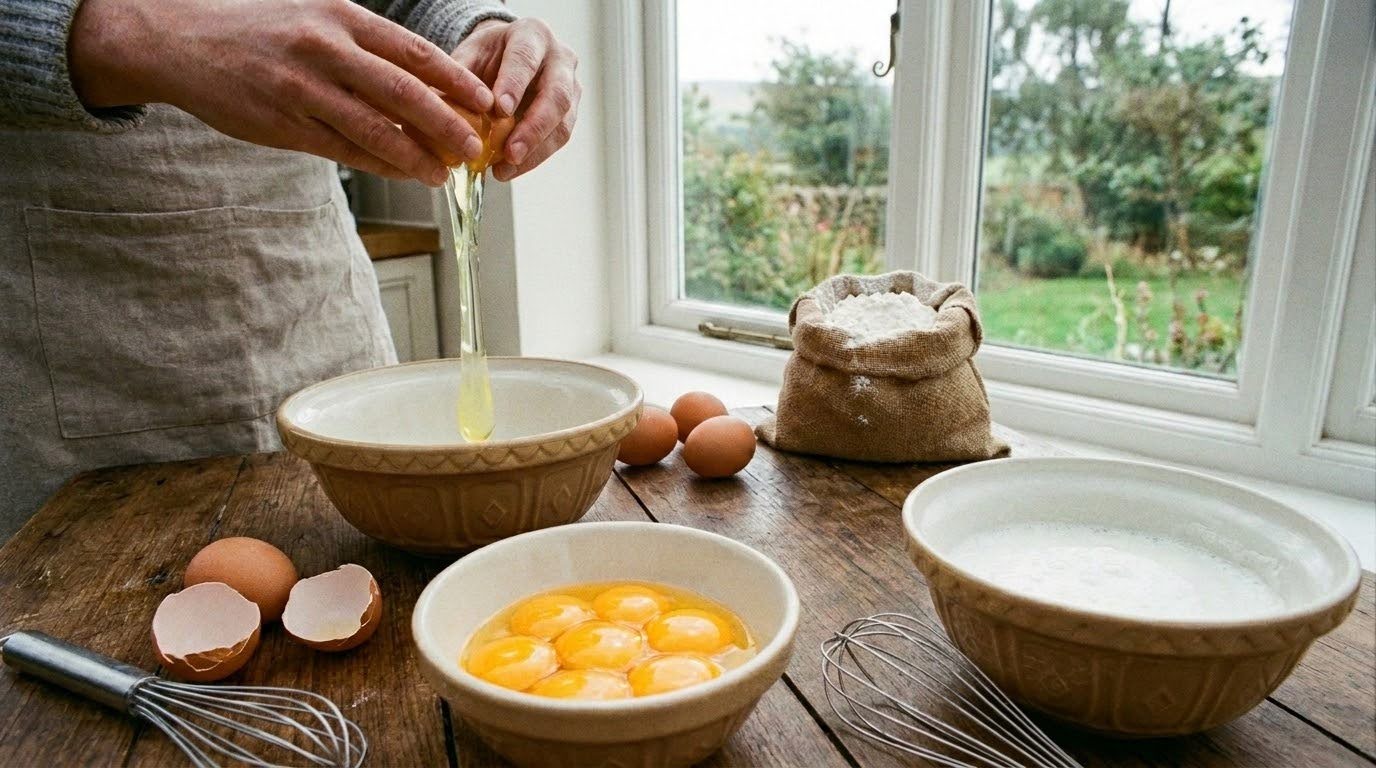
Walk into any serious bakery kitchen and you will notice something that mass-production facilities rarely prioritize: the quality of individual ingredients. Flour gets scrutinized. Butter gets sourced carefully. And eggs? They matter more than most people realize. Professional bakers who have made the switch to fresh farm eggs will tell you it is one of the most impactful ingredient upgrades you can make. Not because of branding or trends, but because the science and the results genuinely back it up.
This post breaks down exactly why experienced bakers reach for farm-fresh eggs, what they do differently in a recipe, and what home bakers can learn from that approach.
The Egg Is Not Just an Egg
Most people treat eggs as a background ingredient. You crack two into a batter, mix, and move on. But in professional baking, eggs are doing several jobs at once. They bind ingredients together. They trap air during mixing. They add moisture. They contribute fat from the yolk. They help with browning. And in certain recipes, they are the entire reason a baked good rises at all.
When you use a lower-quality egg, you do not lose all of those functions. You just get a weaker version of each one. That adds up over a full recipe.
Fresh eggs have a firmer egg white. The protein structure in a fresh white is tighter and more intact, which means it holds air bubbles better when whipped or beaten. For cakes, soufflés, chiffon loaves, and anything that relies on aerated eggs for lift, this matters significantly. An older egg has a thinner, more watery white that cannot trap air as efficiently, and the bake shows it.
What “Fresh” Actually Means in Baking Terms
Freshness in an egg is measurable. One of the most reliable indicators is the Haugh unit, which measures the height of the egg white relative to the weight of the egg. Higher Haugh units mean a fresher, firmer white. This is not just a technical detail for food scientists. It translates directly to what happens inside your mixing bowl.
A fresh egg white, when beaten, reaches a more stable foam. That foam holds its structure longer. When it goes into the oven, the proteins set quickly and maintain the air pockets that give a baked good its rise and its crumb texture.
Professional bakers who have worked with both commercial eggs and farm-sourced eggs often describe a noticeable difference in how the batter behaves before it even goes in the oven. Meringues come out smoother and more glossy. Angel food cake climbs higher up the pan. Genoise sponge holds together with better elasticity.
The Yolk Makes a Difference Too
The white gets a lot of attention in baking science, but the yolk is equally important in most recipes. The yolk contains fat, emulsifiers like lecithin, and pigments that affect both flavor and color. Farm-fresh egg yolks tend to be deeper in color, often a rich orange rather than a pale yellow. That color signals a higher concentration of carotenoids, which come from the hen’s diet.
For bakers, that richer yolk does several things. In brioche and enriched breads, it contributes to a more tender, golden crumb. In custards and pastry creams, it creates a denser, more satisfying texture. In pound cakes and butter cakes, the fat content in the yolk adds moisture that keeps the crumb from drying out after baking.
Lecithin, found naturally in egg yolks, is a natural emulsifier. It helps fat and water blend smoothly in a batter rather than separating. Better emulsification means a more even crumb, a smoother texture, and consistent results from batch to batch.
Why Rise Is About More Than Just Leavener
When home bakers think about rise, they usually think about baking powder, baking soda, or yeast. But eggs contribute to leavening in their own way, and in some baked goods, they are the primary or only source of lift.
In recipes like sponge cakes, ladyfingers, chiffon cake, and Swiss roll, whole eggs or separated eggs whipped with sugar create a foam that is essentially the batter’s structure. The rise comes entirely from the air incorporated into those eggs. There is no chemical leavener doing the work.
The quality of the egg determines how much air you can beat in and how long it stays. A fresh egg with a firm, high-protein white will build a more stable foam than a older egg. That foam holds up during folding and during the early minutes in the oven before the proteins set. The result is a bake that rises taller, sets more evenly, and has a finer, more consistent crumb.
Even in cakes that do use baking powder, eggs still affect the final rise. They provide structure around the gas bubbles created by the leavener. If that structure is weak, the bubbles escape before the batter sets and you get a dense, flat result.
Flavor Is Part of the Equation
Experienced bakers will tell you they can taste the difference. Fresh eggs from well-fed hens have a cleaner, richer, slightly more complex flavor than commercial eggs that have sat in a supply chain for weeks. That flavor is subtle on its own but it compounds in a finished bake.
Think about a simple butter cake or a plain shortbread. There are very few ingredients, which means every one of them shows up in the final flavor. A richer egg yolk makes a richer cake. A fresher white makes a cleaner-tasting meringue. In pastry kitchens where flavor is the whole point, those details are not small.
Professional pastry chefs who write recipes often develop them with fresh, high-quality eggs as the baseline. When home bakers follow those recipes with lower-quality eggs and get a different result, it is often the egg, not the technique.
Temperature and Timing Behavior
Fresh eggs also behave differently when it comes to temperature-sensitive techniques. In custards, fresh yolks coagulate at a slightly more predictable temperature, which means less risk of scrambling during cooking. In emulsified sauces and fillings like lemon curd or crème brûlée, fresh yolks emulsify more consistently.
In bread baking, enriched doughs that include eggs benefit from the structural contribution of fresher proteins. The dough holds together better during proofing and does not tear as easily during shaping. The finished loaf has better oven spring, which is the rapid final rise that happens in the first minutes of baking.
What Home Bakers Can Take Away from This
You do not need to be a trained pastry chef to apply what professional bakers know. The main takeaway is simple: if you are making something where eggs are doing significant structural work, the quality of the egg will show up in the final product.
Recipes where this matters most:
- Sponge cakes and chiffon cakes
- Meringues and pavlova
- Soufflés (both sweet and savory)
- Custards, curds, and pastry cream
- Enriched breads like brioche and challah
- Pound cake and butter cake
- Crepes and delicate pancakes
In these recipes, sourcing fresh, quality eggs is one of the most direct ways to improve your results without changing your technique at all.
For everyday baking like muffins, quick breads, and most cookies, the difference is smaller but still present in flavor and color. For anything technically demanding or flavor-forward, it is worth paying attention to where your eggs come from and how recently they were laid.
A Final Note on What Professional Bakers Actually Do
Most professional bakers are not running to a supermarket for their eggs. They source from suppliers they trust, ideally farms where they know something about how the hens are raised and how the eggs are handled after collection. They look for eggs with deep-colored yolks, firm whites, and a consistent freshness they can count on from week to week.
That consistency matters as much as quality. When you bake professionally, you need to know that what worked yesterday will work tomorrow. A reliable source of fresh, high-quality eggs removes one variable from an already complex process.
For home bakers, the closest equivalent is finding a local farm market or farm stand that sources eggs directly. Eggs that go from the hen to the carton to your kitchen in a short window are genuinely different from eggs that have traveled a long supply chain. Your baked goods will reflect that difference, and once you bake with truly fresh eggs a few times, it becomes hard to justify going back.
Good ingredients produce good baking. Eggs are one of the places where that principle shows up most clearly.