close
Recipes

Velvet and Bone: Traditional Braised Short Rib Recipes Rich With Red Wine

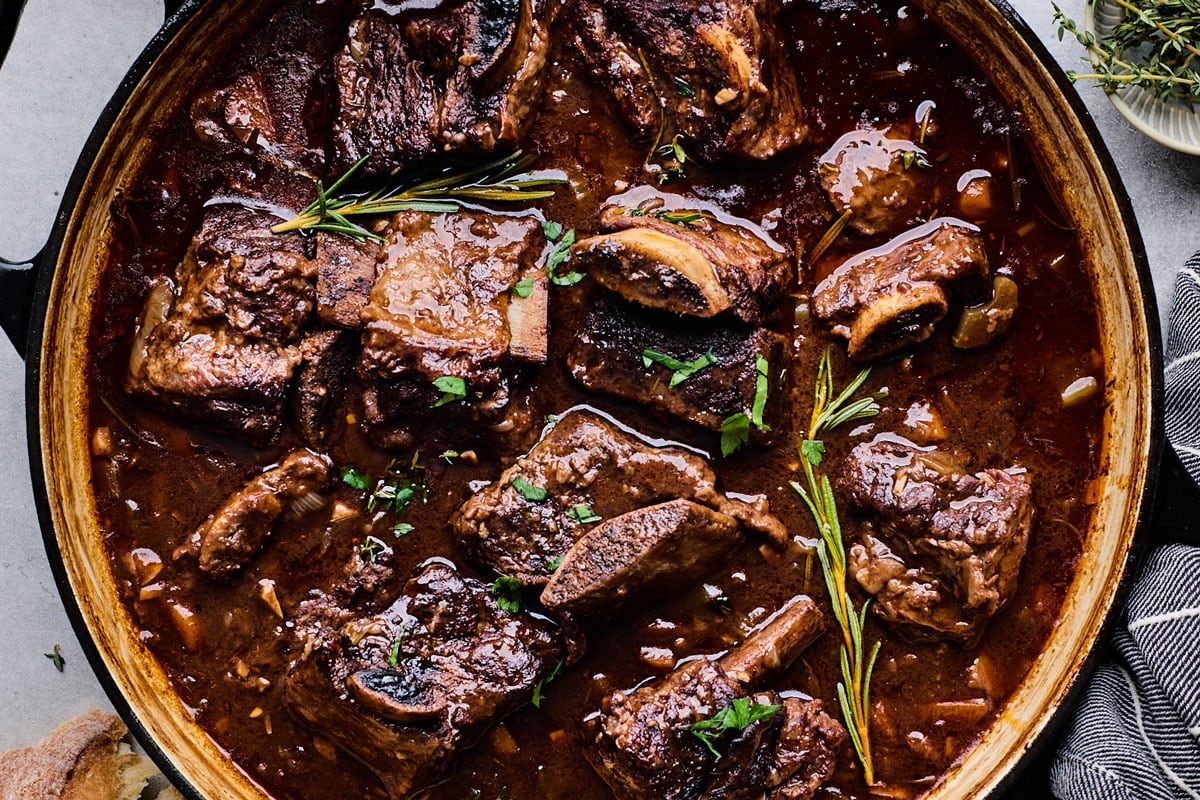
Few dishes anchor a cold-weather dinner table with the quiet authority of red wine-braised beef short ribs. When done right, the meat yields at the slightest nudge of a fork, glistening beneath a dark, mahogany glaze that clings to the palate without feeling heavy or greasy. Yet home cooks frequently run into the same frustrating outcomes: ribs that taste oddly dry despite swimming in liquid, sauces ruined by acrid, overly tannic wine, or a layer of grease pooling across the plate.
Great braising is less about rigid timers and more about managing moisture, collagen breakdown, and reduction. Short ribs come from the chuck or plate section of the steer—hardworking muscles woven with dense bands of connective tissue and intramuscular marbling. Cooked quickly over high heat, they turn impossibly tough. Held gently in a covered Dutch oven with dry red wine, aromatics, and good stock, that tough collagen melts into rich gelatin, turning a humble butcher’s cut into restaurant-caliber comfort food.

Choosing the Right Cut and the Right Wine

Before heating your Dutch oven, two ingredient decisions determine 80% of your final result: how your ribs are cut and what bottle you uncork.
Ask your butcher for English-cut bone-in beef short ribs, roughly two to three inches long and at least one and a half inches thick, with generous marbling running through the meat rather than thick, solid caps of exterior fat. Avoid thin flanken-style ribs (cut across the bones into strips), which are built for fast Korean-style grilling rather than three-hour braises. Keep the bones in; as the ribs simmer, the bones anchor the meat so it holds its handsome square shape instead of shredding into stringy fibers, while contributing body to the sauce.
When selecting wine, follow a straightforward rule: choose a dry, full-bodied red with bright acidity and moderate tannins, and never cook with anything labeled “cooking wine.” Cabernet Sauvignon, Côtes du Rhône, Syrah, Malbec, or a sturdy Zinfandel all stand up beautifully to rich beef. Avoid heavily oaked, ultra-tannic bottles—as the braising liquid reduces by half, harsh wood tannins concentrate into bitterness. Plan on using an entire 750ml bottle for four to five pounds of ribs; pouring half the bottle into the pot and reducing it down builds deep, jammy complexity that stock alone can never replicate.

Four Rules for Foolproof Braising Texture

Regardless of which flavor profile you choose, disciplined technique separates good short ribs from unforgettable ones:
  • Salt early and dry thoroughly: Season the ribs generously with kosher salt at least two hours—or up to 24 hours uncovered on a wire rack in the refrigerator—before cooking. Pre-salting seasons the meat deep inside while drying the exterior surface so it browns rapidly instead of steaming.

  • Sear in uncrowded batches: Brown the ribs over medium-high heat until a deep, dark crust forms on at least two or three sides. Never crowd the pan; if the meat touches, trapped steam drops the pan temperature and prevents true caramelization.

  • Submerge only two-thirds of the meat: Braising is moist-heat cooking, not boiling. Your liquid—wine plus stock—should come roughly two-thirds of the way up the sides of the ribs, leaving the browned tops exposed above the surface so they roast gently under the lid while the submerged bases tenderize.

  • Test by feel, not the clock: Ovens vary. Start checking the ribs around the two-and-a-half-hour mark by sliding a paring knife or cake tester into the thickest part of the meat. When the blade slides in and out with zero resistance—like probing warm butter—pull the pot immediately. Over-braising squeezes moisture out of the muscle fibers, leaving meat that falls apart yet tastes dry.

Recipe 1: Classic French-Style Burgundy Braised Short Ribs

Inspired by traditional boeuf bourguignon, this version balances a full bottle of dry red wine with sweet caramelized aromatics, smoky lardons, and fresh thyme for a glossy, deeply savory pan sauce.

Ingredients

  • 4.5 pounds bone-in English-cut beef short ribs (about 6 to 8 thick ribs), trimmed of excess hard surface fat

  • Kosher salt and freshly cracked black pepper

  • 4 ounces thick-cut slab bacon or pancetta, cut into small batons (lardons)

  • 2 tablespoons neutral high-heat oil (avocado or grapeseed), if needed

  • 2 large yellow onions, coarsely chopped

  • 3 medium carrots, peeled and cut into 1-inch chunks

  • 2 ribs celery, chopped

  • 2 tablespoons double-concentrated tomato paste

  • 1 whole head of garlic, halved crosswise

  • 1 (750ml) bottle dry red wine, such as Côtes du Rhône or Cabernet Sauvignon

  • 2 cups unsalted beef bone broth or rich veal stock

  • 6 sprigs fresh thyme, 4 sprigs flat-leaf parsley, and 2 bay leaves, tied together with kitchen twine

  • 1 tablespoon cold unsalted butter, for finishing

Method

Preheat your oven to 325°F (165°C). Pat the pre-salted short ribs completely dry with paper towels and season all over with black pepper.
Set a large, heavy-bottomed enameled cast-iron Dutch oven over medium heat. Add the bacon lardons and cook, stirring occasionally, until crisp and golden brown, about 6 to 8 minutes. Transfer the crispy bacon to a paper-towel-lined plate with a slotted spoon, leaving the rendered fat in the pot.
Increase the heat to medium-high. Working in two batches so the pan stays hot, sear the short ribs for 3 to 4 minutes per side until deeply browned on the meaty faces. Transfer the browned ribs to a sheet pan. Pour off all but two tablespoons of fat from the Dutch oven.
Lower the heat to medium and add the onions, carrots, and celery with a pinch of salt. Cook for 8 to 10 minutes, scraping up the browned fond stuck to the bottom of the pot, until the vegetables soften and turn golden at the edges. Stir in the tomato paste and cook for 2 minutes until it darkens to a brick-red color.
Pour in the entire bottle of red wine, turn the heat to high, and bring to a vigorous boil. Let the wine reduce by roughly half—about 12 to 15 minutes—until its sharp alcohol aroma mellows into a rich syrup. Nestle the short ribs back into the pot bone-side down, tuck the halved garlic head and herb bundle between the meat, and pour in enough beef stock to reach two-thirds up the sides of the ribs.
Bring the liquid to a gentle simmer on the stovetop, cover the pot tightly with a sheet of parchment paper pressed directly over the ribs followed by the heavy lid, and transfer to the oven. Braise undisturbed for 2.5 to 3 hours, until the meat yields effortlessly to a fork.
Carefully transfer the tender ribs to a warm platter and tent loosely with foil. Strain the braising liquid through a fine-mesh sieve into a clean saucepan, pressing lightly on the vegetables to extract their flavor before discarding the solids. Skim off the clear layer of surface fat with a ladle (or use a fat separator). Simmer the strained liquid over medium-high heat for 10 to 15 minutes until reduced to a velvety glaze that coats the back of a spoon. Turn off the heat, swirl in the cold butter for mirror-like shine, and spoon the sauce over the ribs, scattering the reserved crispy bacon on top.

Recipe 2: Italian Brasato al Barolo With Rosemary and Orange Peel

In northern Italy’s Piedmont region, beef is braised slowly in structured red wine infused with warm spices and bright citrus zest, cutting through the richness of the meat with aromatic lift.

Ingredients

  • 4.5 pounds bone-in beef short ribs, seasoned well with kosher salt and black pepper

  • 2 tablespoons extra-virgin olive oil

  • 1 large red onion, finely diced

  • 2 shallots, thinly sliced

  • 2 carrots and 2 celery stalks, finely diced

  • 4 cloves garlic, smashed

  • 2 tablespoons tomato paste

  • 1 (750ml) bottle Nebbiolo, Barolo, or Barbera d’Asti

  • 1.5 cups low-sodium beef or chicken stock

  • 3 sprigs fresh rosemary and 3 sage leaves

  • 3 wide strips of fresh orange peel (removed with a vegetable peeler, avoiding bitter white pith)

  • 1 cinnamon stick and 4 whole cloves

Method

Preheat the oven to 325°F. Heat the olive oil in a Dutch oven over medium-high heat and sear the seasoned short ribs in batches until richly browned on all sides, about 8 minutes per batch. Set the ribs aside.
Add the finely diced red onion, shallots, carrots, and celery to the pot and sweat over medium heat for 10 minutes until sweet and softened. Stir in the smashed garlic and tomato paste, cooking for 2 minutes until fragrant.
Deglaze with the Italian red wine, scraping the bottom of the pot thoroughly, and boil until reduced by one-third. Return the short ribs to the pot alongside the stock, rosemary, sage, orange peel strips, cinnamon stick, and cloves. Cover tightly and braise in the oven for 2.5 to 3 hours until completely tender.
Remove the ribs, strain the sauce, and discard the spices and herbs. Skim away the surface fat, simmer the sauce until rich and glossy, and serve the ribs spooned over creamy polenta or parmesan-whipped potatoes, garnished with freshly grated orange zest and chopped flat-leaf parsley.

The Overnight Secret That Makes Braised Ribs Even Better

If you are hosting a dinner party, never make braised short ribs the same afternoon—make them one to two days ahead. Once the ribs finish braising, let them cool down submerged directly inside their strained sauce, then refrigerate the entire covered pot overnight.
Chilling accomplishes two remarkable things: every drop of rendered beef fat rises to the top and solidifies into a firm cap that you can lift off cleanly in seconds, and the cooling muscle fibers reabsorb seasoned gelatin from the sauce as they rest. The next evening, simply remove the fat cap, place the covered pot over low heat (or in a 300°F oven) for 35 to 40 minutes until heated gently through, and serve a dinner that tastes even deeper—while leaving your kitchen spotless before the first guest rings the doorbell.